Italian Officials Save Tower From A Fate Worse Than Leaning
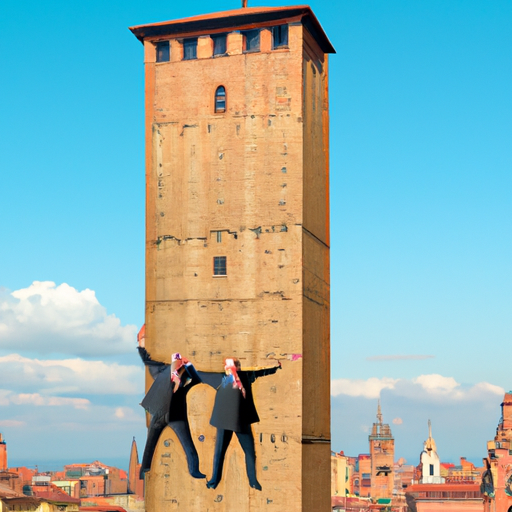
BOLOGNA, Italy – In what can only be described as a stunning display of heroic intervention, Italian officials have stepped in to save one of two 12th-century towers from a fate worse than leaning. The shorter of the two towers in Bologna, affectionately known as the “little brother,” had been dangerously tilting for years, prompting fears of an imminent collapse that could have spelled disaster for the city’s skyline.
Authorities were quick to take action, calling on a team of experts to assess the situation and come up with a solution. After much deliberation and no small amount of trepidation, it was decided that the only way to save the tower was to chain it to the ground like some kind of rebellious teenager. The operation was carried out with military precision, and within hours the smaller tower was secured in place, safe and sound.
The news of the daring rescue was greeted with widespread relief by the city’s inhabitants, who had grown accustomed to the leaning tower as a quirky and endearing feature of their beloved Bologna. But amidst the celebrations and back-slapping, there was a sense of mourning for what had been lost. The tower’s lean was, after all, a defining characteristic of its character, a symbol of the city’s proud history and idiosyncratic spirit. Its newfound rigidity felt like an admission of defeat, a capitulation to the forces of conformity and orthodoxy.
But the officials were unrepentant, insisting that they had acted in the best interests of public safety and urban planning. “We couldn’t just stand by and watch this tower collapse,” said one official, who spoke on condition of anonymity. “People could have been hurt, property damaged, dogs and cats living together. It would have been chaos.”
Critics, however, have accused the officials of pandering to a culture of risk-aversion and bureaucratic inertia. “This is typical Italian bureaucracy at its worst,” fumed one commentator on social media. “What next? Are we going to ban pasta because it’s too hot to eat?”
Despite the naysayers, the officials remain steadfast in their determination to keep Bologna’s urban landscape safe and stable. Plans are reportedly in the works to further strengthen and stabilize the remaining tower, which is still leaning at a rakish angle. Some have even suggested that the city embrace its quirks and market itself as a destination for leaning-tower enthusiasts, joining the ranks of Pisa and Suurhusen in Germany.
Only time will tell whether the officials’ intervention was a masterstroke of urban engineering or a slap in the face to Bologna’s proud tradition of quirkiness and individuality. But for now, at least, one thing is certain: the little brother is standing tall once again, no longer leaning but forever remembered as a symbol of stubbornness and defiance in the face of the odds.